DID YOU KNOW…? Did the man credited with inventing the game Monopoly™ actually invent it? *
By Jack Bagley / *Ingles 7 española |
Now we’re ready to close out February!
The second month of the year (and the shortest) is about to be history. Was yours a good one? I certainly hope that it was.
Spring is right around the corner, you know. Three more weeks or so, and we’ll celebrate the annual renewal of the world, at least in the Northern Hemisphere. Those south of the Equator will be entering autumn.
Interesting, that.
So is trivia – interesting, I mean. Enjoy!
Did you know …
… figs are not fruits? Not technically, anyway. A fig is actually an inflorescence. What’s that you say – you don’t know what an inflorescence is? Well, an inflorescence (okay, I just like saying it) is a cluster of flowers and seeds around a stem. In other words, when you eat a fig, you’re actually eating flowers. (Makes me think the cows have something going there.)
… the word “money” is relatively new in English? While the concept of money has been around since humans first figured out exchange systems, the actual word didn’t appear in English until the 14th Century. It was derived from the Latin word moneta, which was another name for the Roman goddess Juno. Why Juno? Because the Romans first minted coins near Juno’s temple around 300 BC. (Money is also relatively rare in my wallet.)
… television productions can sometimes go overboard with regulations? Consider: During 2014, the television series Downton Abbey showed a plastic water bottle in the background of a promotional photo for the show. Downton Abbey was set in the 1910s and 1920s, long before plastic water bottles existed. Made aware of the goof, the producers issued an edict for the set: all things modern were banned on the business side of the cameras. The ban extended to water bottles, of course, along with modern watches, modern jewelry, and even actors’ underwear. (Jeez, you make one little mistake, and then …)
… three presidents died on July 4, and one was born that day? Presidents John Adams (1735-1826), Thomas Jefferson (1743-1826), and James Monroe (1758-1831) all died on the fourth of July in their respective years, while Calvin Coolidge (1872-1933) was born on Independence Day. (A popular day for more than one reason, it seems.)
… the first observance of Memorial Day was in 1868? The first official ceremony was held May 30, 1868 at Arlington National Cemetery. It was then called Decoration Day and the first observance was presided over by General Ulysses S. Grant (1822-1885). Grant recorded that about 5,000 people attended on a day that was “too warm for comfort,” and those in attendance endured a two-hour speech from another general and future president, James A. Garfield (1831-1881). (What could he possibly have had to say that took two hours?) 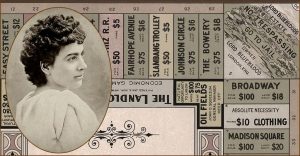
… the man credited with inventing the popular board game Monopoly™ didn’t actually invent it? Charles Darrow (1889-1967) is credited with inventing the game, which he sold in 1935 to Parker Brothers and thus became a millionaire. But Darrow did not invent the game. Rather, he found a game made in 1904 called The Landlord’s Game, created and patented by Elizabeth Magie (1866-1948), and developed his own version based on it. The games are very similar in many ways (both, for instance, have railroads, utilities, and even a jail), but when Magie tried to sell her game she was told it was too complicated and too overtly political. Magie’s game was created to illustrate the economic teachings of Henry George (1839-1897), a progressive economist who felt that unchecked capitalism was dangerous. Darrow discovered Magie’s game when a friend taught him to play, and he made several cosmetic changes to it, then patented it and sold it as Monopoly. While the game made Darrow a very wealthy man, Magie only received $500 for her original work, and no credit toward the creation of Monopoly. Additional trivia note: Lest you think Darrow a thief for taking Magie’s original game and using it to make his own, you should know that her patent on The Landlord’s Game, issued in 1904, had expired by the time Darrow patented his version in 1935. (No good deed goes unpunished, it is said.)
… penguins swim faster than they walk? Birds, of course, fly faster than they walk, but penguins cannot fly. So they make up for it with their swim speeds. A penguin can swim between five and six miles per hour, with bursts of up to 15 mph. Their walking (waddling?) speed is between 1.7 and 2.4 miles per hour. (Well, what’s there to walk to in Antarctica?)
… a businessman once made half a billion dollars in one day? Howard Hughes (1905-1976) sold his 75% holdings in Trans World Airlines in 1966. Hughes received a bank draft for $546,549,171 in return for the holdings that day. (Some guys have all the luck.)
… the fire extinguisher was invented in the early 19th Century? Captain George William Manby (1765-1854), a British author and inventor, created the first portable fire extinguisher in 1818. Manby’s design held three gallons of potassium carbonate under compressed air pressure. (Buckets of water were used prior to 1818.)
… a breed of shark can live in fresh or salt water? The bull shark is able to live in both kinds of water because it is able to regulate salt and other substances in its blood. A shark attack in a freshwater creek in New Jersey in 1916 is attributed to a bull shark. Bull sharks have also been found in the Mississippi River.
… kilts are not native to Scotland? They originated in France. (I’m glad they migrated.)
Now … you know!
Copyright © 2026 Jack Bagley
_______________________________
For our Spanish speakers / Para nuestros hablantes de español
__________________________
¿SABÍAS QUE…?
¿El hombre acreditado con la invención del juego Monopoly™ realmente lo inventó?
Por Jack Bagley / Inglés 7 Español
¡Ahora estamos listos para despedir febrero!
El segundo mes del año (y el más corto) está a punto de pasar a la historia. ¿Fue un buen mes para usted? Sinceramente espero que sí.
La primavera está a la vuelta de la esquina. En unas tres semanas celebraremos la renovación anual del mundo, al menos en el hemisferio norte. Los que están al sur del ecuador estarán entrando en el otoño.
Interesante, ¿verdad?
La trivia también es interesante. ¡Disfrútela!
¿Sabía usted que…
… los higos no son frutas? Al menos no técnicamente. En realidad, un higo es una inflorescencia. ¿Que no sabe qué es una inflorescencia? Bueno, una inflorescencia (me gusta decirlo) es un conjunto de flores y semillas que crecen alrededor de un tallo. En otras palabras, cuando usted come un higo, en realidad está comiendo flores. (Eso me hace pensar que las vacas tienen algo a su favor).
… la palabra “dinero” es relativamente nueva en inglés? Aunque el concepto del dinero existe desde que los humanos establecieron sistemas de intercambio, la palabra como tal no apareció en inglés hasta el siglo XIV. Proviene del latín moneta, otro nombre de la diosa romana Juno. ¿Por qué Juno? Porque los romanos acuñaron sus primeras monedas cerca del templo de Juno alrededor del año 300 a.C. (El dinero también es relativamente escaso en mi billetera).
… las producciones de televisión a veces pueden exagerar con las regulaciones? En 2014, la serie Downton Abbey mostró una botella de agua plástica en el fondo de una foto promocional. La serie está ambientada en las décadas de 1910 y 1920, mucho antes de que existieran las botellas plásticas. Al enterarse del error, los productores prohibieron cualquier objeto moderno del lado comercial de las cámaras. La prohibición incluyó botellas de agua, relojes modernos, joyería moderna e incluso la ropa interior de los actores. (Uno comete un pequeño error y luego…)
… tres presidentes murieron el 4 de julio y uno nació ese mismo día? John Adams (1735-1826), Thomas Jefferson (1743-1826) y James Monroe (1758-1831) murieron un 4 de julio en sus respectivos años, mientras que Calvin Coolidge (1872-1933) nació el Día de la Independencia. (Parece ser una fecha popular por más de una razón).
… la primera conmemoración del Día de los Caídos (Memorial Day) fue en 1868? La primera ceremonia oficial se celebró el 30 de mayo de 1868 en el Cementerio Nacional de Arlington. Entonces se llamaba “Decoration Day” (Día de Decoración) y fue presidida por el general Ulysses S. Grant (1822-1885). Grant registró que unas 5,000 personas asistieron en un día “demasiado caluroso para estar cómodo”, y los presentes escucharon un discurso de dos horas del también general y futuro presidente James A. Garfield (1831-1881). (¿Qué podría haber dicho durante dos horas?)
… el hombre acreditado con la invención del popular juego de mesa Monopoly™ en realidad no lo inventó? Charles Darrow (1889-1967) es reconocido como el inventor del juego, que vendió en 1935 a Parker Brothers y con el cual se convirtió en millonario. Pero Darrow no creó el juego. En realidad, encontró un juego de 1904 llamado The Landlord’s Game (El Juego del Terrateniente), creado y patentado por Elizabeth Magie (1866-1948), y desarrolló su propia versión basada en él. Los juegos son muy similares (ambos incluyen ferrocarriles, servicios públicos e incluso una cárcel), pero cuando Magie intentó vender su juego le dijeron que era demasiado complicado y demasiado político. El juego de Magie fue diseñado para ilustrar las teorías económicas de Henry George (1839-1897), un economista progresista que creía que el capitalismo sin control era peligroso. Darrow conoció el juego cuando un amigo le enseñó a jugar, hizo algunos cambios estéticos, lo patentó y lo vendió como Monopoly. Mientras el juego hizo muy rico a Darrow, Magie solo recibió $500 por su trabajo original y ningún crédito por la creación de Monopoly. Nota adicional: antes de considerar a Darrow un ladrón, hay que señalar que la patente original de Magie, emitida en 1904, ya había expirado cuando Darrow patentó su versión en 1935. (Dicen que ninguna buena acción queda sin castigo).
… los pingüinos nadan más rápido de lo que caminan? Las aves vuelan más rápido de lo que caminan, pero los pingüinos no pueden volar. Compensan eso con su velocidad en el agua. Un pingüino puede nadar entre cinco y seis millas por hora, con ráfagas de hasta 15 mph. Su velocidad al caminar (¿o tambalearse?) es de entre 1.7 y 2.4 millas por hora. (Bueno, ¿a dónde hay que caminar en la Antártida?)
… un empresario ganó más de medio billón de dólares en un solo día? Howard Hughes (1905-1976) vendió el 75% de sus acciones en Trans World Airlines en 1966. Ese día recibió un giro bancario por $546,549,171. (Algunos tienen toda la suerte).
… el extintor de incendios fue inventado a principios del siglo XIX? El capitán George William Manby (1765-1854), autor e inventor británico, creó el primer extintor portátil en 1818. Su diseño contenía tres galones de carbonato de potasio bajo presión de aire comprimido. (Antes de 1818 se usaban cubos de agua).
… una especie de tiburón puede vivir en agua dulce o salada? El tiburón toro puede vivir en ambos ambientes porque regula la sal y otras sustancias en su sangre. Un ataque de tiburón en un arroyo de agua dulce en Nueva Jersey en 1916 se atribuye a un tiburón toro. También se han encontrado tiburones toro en el río Mississippi.
… los kilts no son originarios de Escocia? Se originaron en Francia. (Me alegra que hayan emigrado).
Ahora… ¡ya lo sabe!
[email protected]
Copyright © 2026 Jack Bagley
____________________________
Traducción al español asistida por inteligencia artificial (IA).