DID YOU KNOW…? Who was the producer’s first choice to host the original “The Price is Right”? *
By Jack Bagley / * Inglés y español |
Five hundred columns down, and an infinity of columns yet to go!
After last week’s party for the 500th collection of silly trivia, you’d think I would be ready to give up, right? Heck no. I’m just getting started. In fact, I plan to be around until we hit 1,000 columns and then some!
So while you settle back and enjoy your favorite beverage appropriate for the time of day in which you read this, I’ll be working on future columns to enlighten and entertain you.
Enjoy!
Did you know …
… sharks have more to fear from humans than the other way around? Humans kill around 70,000,000 sharks annually. The killing is done for various reasons, some as silly as making shark-fin soup. But the reverse – sharks killing humans – is a very low-chance scenario. You are actually more likely to be hit by lightning or bitten by a dog than to be attacked by a shark. (Or even bitten by a dog being hit by lightning.)
… children learn to lie as early as six months old? No, they don’t tell gollywhopper fibs because they can’t yet talk. But researchers tell us that kids that young can – and do – deceive their parents to get attention, by pretending to be upset or by laughing for no reason. (Heck, that works for me today!) 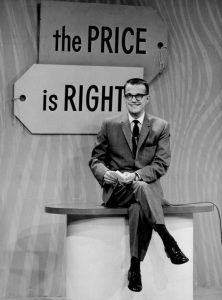
… who the first choice to host the original version of The Price is Right was? The original version of the game show premiered in 1956, and was hosted by Bill Cullen (1920-1990). Cullen got the job because the man who was originally offered the hosting slot by the producers, actor Dick Van Dyke (born 1925), turned it down. Van Dyke said he felt a show where contestants had to guess the prices of prizes would fail. Cullen went on to host the show through its entire run until 1965. The show was revived in 1972 with host Bob Barker (1923-2023) and has been on the air ever since. (Hey, even Dick Van Dyke can be wrong once in a while.)
… popcorn was the first dry breakfast cereal? Okay, bear with me a moment. The first manufactured dry breakfast cereal was Kellogg’s Corn Flakes, after Will Kellogg (1860-1951) created them for his sanatorium in Battle Creek, Michigan. But the first-ever was popcorn and it was enjoyed by the Pilgrims on the morning after the first Thanksgiving at Plymouth Rock. Someone (nobody is certain who) thought that having popcorn with milk on it for breakfast was a great idea, and apparently it was. (Thanks to David for the tip!)
… you may suffer from hellenologophobia? If you do, it means you have a fear of complex scientific terminology. Either that or Greek words or terms. (Or both.)
… snow is actually colorless? It’s also translucent. So you ask, why does it appear white? Because sunlight is reflected off the snowflake’s faceted surface, thus appearing white to us. (Can the song be changed to “I’m dreaming of a translucent Christmas:?)
… a nation sued a grocery company over the use of its name? A British supermarket company called Iceland Foods opened stores in 2002, and was almost immediately sued by the government of the nation of Iceland. Through the years, there have been several court challenges to the use of the name, almost all of which Iceland (the country) has won, trying to get the company’s trademarks invalidated. (Maybe change the name to Iceberg?)
… ancient astronomers had two different names for the same planet? Venus, second planet from the Sun, is arguably the most brilliant point of light in the night sky, surpassed only by the Moon. But back in ancient days, astronomers were not aware that the object they saw as the “morning star” was the same object seen later in the year as the “evening star.” So they called the morning star Phosphorous and the evening star Hesperus. Once it was determined that they were the same body, the point of light was named Venus, after the Roman goddess of love. (A rose by any other name …)
… the record-setting contract between Nike and a basketball superstar was based on several conditions? When the company formed a partnership with Michael Jordan (born 1963) for the 1984-85 basketball season, they had four conditions, at least one of which had to be met for the contract to be valid: Jordan had to be named NBA Rookie of the Year, average 20 points per game, be named to the All-Star team, or sell $4 million worth of shoes in a year. Ever the underachiever, Jordan not only became Rookie of the Year, he averaged 28.4 points per game, made the All-Star team, and sold $100 million worth of shoes. (Nothing like fulfilling the contract!)
… one U.S. president had fifteen children? John Tyler (1790-1862), the tenth President of the United States, had eight children with his first wife Letitia Christian (1790-1842) and another seven with his second wife Julia Gardiner (1820-1889). When his fifteenth and final child, a daughter named Pearl (1860-1947) was born, he was 70. Additional trivia note: Two of Tyler’s grandchildren survived into the 21st Century. Lyon Gardiner Tyler, Jr. (1925-2020) and Harrison Ruffin Tyler, Sr. (1928-2025) were sons of Tyler’s twelfth child, Lyon Gardiner Tyler (1853-1935).
… some creative geniuses had very odd habits? Cases in point: author Rudyard Kipling (1865-1936) would only write when his pen held black ink. Composer Ludwig van Beethoven (1770-1827) would pour ice water over his head when he was creating music, because he felt that it stimulated his brain. Author Charles Dickens (1812-1870) would only write or sleep while facing north. Composer Gioachino Rossini (1792-1868) covered himself with blankets when he was writing music. And novelist Marcel Proust (1871-1922) worked in bed, and only in a soundproof room. (And people have the nerve to call me strange!)
Now … you know!
Copyright © 2026 Jack Bagley
________________________
For our Spanish speakers / Para nuestros hablantes de español
________________________
¿SABÍA USTED…?
¿Quién fue la primera opción de los productores para presentar el programa original “The Price is Right”?
Por Jack Bagley / Inglés y español
Traducción al español asistida por Inteligencia Artificial (IA).
¡Quinientas columnas publicadas y una infinidad más por venir!
Después de la celebración de la semana pasada por la colección número 500 de curiosidades y datos divertidos, uno podría pensar que ya estoy listo para retirarme, ¿verdad? ¡De ninguna manera! Apenas estoy comenzando. De hecho, pienso seguir aquí hasta llegar a las 1,000 columnas… ¡y más allá!
Así que mientras usted se acomoda y disfruta de su bebida favorita apropiada para la hora del día en que esté leyendo esto, yo estaré trabajando en futuras columnas para informarlo y entretenerlo.
¡Disfrútelo!
¿Sabía usted que…?
… los tiburones tienen más que temer de los humanos que los humanos de ellos?
Los seres humanos matan alrededor de 70 millones de tiburones cada año. Esto ocurre por diversas razones, algunas tan absurdas como la preparación de sopa de aleta de tiburón. Sin embargo, el caso contrario —los tiburones matando personas— es extremadamente raro. De hecho, es más probable que una persona sea alcanzada por un rayo o mordida por un perro que atacada por un tiburón. (O incluso mordida por un perro que acaba de ser alcanzado por un rayo).
… los niños aprenden a mentir desde los seis meses de edad?
No, no cuentan historias fantásticas porque todavía no pueden hablar. Pero los investigadores afirman que los bebés de esa edad pueden engañar a sus padres para llamar la atención, fingiendo estar molestos o riéndose sin motivo aparente. (¡Caramba, eso todavía me funciona hoy!)
… quién fue la primera opción para presentar la versión original de “The Price is Right”?
La versión original del programa se estrenó en 1956 y fue presentada por Bill Cullen (1920-1990). Cullen obtuvo el trabajo porque el actor Dick Van Dyke (nacido en 1925), quien había sido la primera opción de los productores, rechazó la oferta. Van Dyke pensó que un programa donde los concursantes tenían que adivinar precios de premios sería un fracaso. Cullen terminó conduciendo el programa durante toda su emisión hasta 1965. El programa fue relanzado en 1972 con Bob Barker (1923-2023) como presentador y continúa al aire hasta hoy. (Bueno, hasta Dick Van Dyke puede equivocarse de vez en cuando).
… las palomitas de maíz fueron el primer cereal seco para el desayuno?
Un momento, acompáñeme en esta historia. El primer cereal seco fabricado comercialmente fueron los Corn Flakes de Kellogg’s, creados por Will Kellogg (1860-1951) para su sanatorio en Battle Creek, Michigan. Pero el primer cereal seco consumido en el desayuno fue en realidad las palomitas de maíz. Los peregrinos las disfrutaron la mañana después del primer Día de Acción de Gracias en Plymouth Rock. Alguien (nadie sabe exactamente quién) pensó que agregarles leche sería una excelente idea para desayunar, y al parecer lo fue. (¡Gracias a David por el dato!)
… usted podría padecer helenologofobia?
Si la padece, significa que tiene miedo a la terminología científica compleja. O a las palabras y expresiones griegas. (O a ambas cosas).
… la nieve en realidad no tiene color?
Además, es translúcida. Entonces, ¿por qué la vemos blanca? Porque la luz solar se refleja en las superficies facetadas de los copos de nieve, haciéndola parecer blanca a nuestros ojos. (¿Podrían cambiar la canción a “Estoy soñando con una Navidad translúcida”?)
… un país demandó a una empresa de supermercados por usar su nombre?
Una cadena británica llamada Iceland Foods abrió tiendas en 2002 y casi de inmediato fue demandada por el gobierno de Islandia. A lo largo de los años ha habido varias disputas legales sobre el uso del nombre, y en la mayoría de los casos Islandia (el país) ha obtenido fallos favorables intentando invalidar las marcas registradas de la empresa. (¿Quizás deberían cambiar el nombre a Iceberg?)
… los astrónomos antiguos tenían dos nombres diferentes para el mismo planeta?
Venus, el segundo planeta desde el Sol, es posiblemente el punto más brillante del cielo nocturno después de la Luna. Sin embargo, en la antigüedad los astrónomos no sabían que el objeto que veían como la “estrella de la mañana” era el mismo que aparecía meses después como la “estrella de la tarde”. Por eso llamaban a la estrella matutina Fósforo y a la vespertina Héspero. Cuando se descubrió que ambos eran el mismo cuerpo celeste, recibió el nombre de Venus, la diosa romana del amor. (Una rosa con cualquier otro nombre…)
… el histórico contrato entre Nike y una superestrella del baloncesto dependía de varias condiciones?
Cuando Nike firmó una alianza con Michael Jordan (nacido en 1963) para la temporada 1984-1985, estableció cuatro condiciones, de las cuales al menos una debía cumplirse para validar el contrato: Jordan debía ser nombrado Novato del Año de la NBA, promediar 20 puntos por partido, ser seleccionado para el Juego de Estrellas o vender cuatro millones de dólares en zapatos durante un año. Siempre tan modesto, Jordan no solo fue nombrado Novato del Año, sino que promedió 28.4 puntos por partido, fue seleccionado para el Juego de Estrellas y vendió 100 millones de dólares en calzado. (¡Eso sí es cumplir un contrato!)
… un presidente de Estados Unidos tuvo quince hijos?
John Tyler (1790-1862), décimo presidente de Estados Unidos, tuvo ocho hijos con su primera esposa, Letitia Christian (1790-1842), y otros siete con su segunda esposa, Julia Gardiner (1820-1889). Cuando nació su decimoquinta y última hija, Pearl (1860-1947), Tyler tenía 70 años. Dato adicional: dos de sus nietos sobrevivieron hasta el siglo XXI. Lyon Gardiner Tyler Jr. (1925-2020) y Harrison Ruffin Tyler Sr. (1928-2025) eran hijos del duodécimo hijo de Tyler, Lyon Gardiner Tyler (1853-1935).
… algunos genios creativos tenían hábitos muy extraños?
Algunos ejemplos: el escritor Rudyard Kipling (1865-1936) solo escribía cuando su pluma contenía tinta negra. El compositor Ludwig van Beethoven (1770-1827) se vertía agua helada sobre la cabeza mientras componía música porque creía que estimulaba su cerebro. El escritor Charles Dickens (1812-1870) solo escribía o dormía mirando hacia el norte. El compositor Gioachino Rossini (1792-1868) se cubría con mantas cuando escribía música. Y el novelista Marcel Proust (1871-1922) trabajaba en la cama y únicamente en una habitación insonorizada. (¡Y todavía hay quienes dicen que yo soy raro!)
Ahora… ya lo sabe.
[email protected]
Copyright © 2026 Jack Bagley