An Update from Congressman Austin Scott
By Austin Scott / * Inglés y español |
June 15, 2026
Dear Georgian,
For 76 days, Democrats in D.C. not only refused to fund Immigrations and Customs Enforcement and Customs and Border Patrol, but they repeatedly blocked attempts to ensure these vital agencies were fully funded.
Last week, House Republicans fixed this through the reconciliation process and passed the Secure America Act. The legislation funds Customs and Border Patrol through September 2029, ensuring that our ICE and Border Agents have the funding they need to effectively conduct their mission of securing our borders and protecting Americans.
Funding law enforcement is not optional, ensuring our borders are secure is not optional, and protecting Americans is not optional. House Republicans remain committed to all three of these priorities.
As always, my staff and I are here to help. If you need assistance with a federal agency or have comments or concerns to share with me, please do not hesitate to call my Warner Robins, Tifton, or Washington, D.C. offices. To receive frequent updates, I encourage you to visit my website, like my Facebook page, follow me on YouTube, and follow me on Twitter.
Keep reading for the full update.
Sincerely,

Congressman Austin Scott
 |
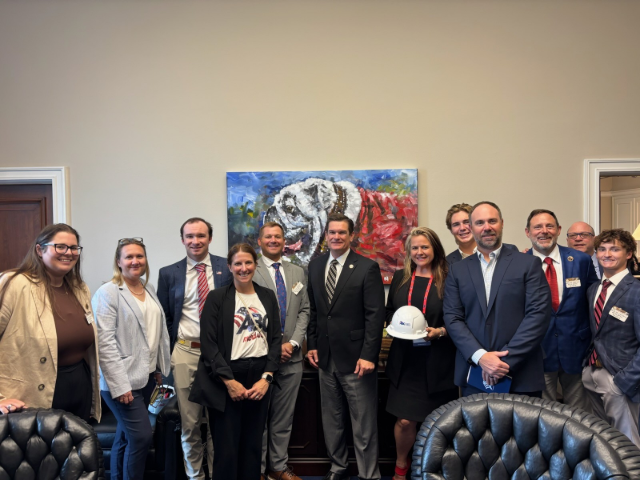
Meeting with the Associated Builders and Contractors of Georgia
On Wednesday, I met with the Associated Builders and Contractors of Georgia in my office in Washington, D.C.
We discussed workforce development, immigration, tax policy, healthcare, regulatory burdens, and how Congress can continue to support free enterprise in the construction industry.
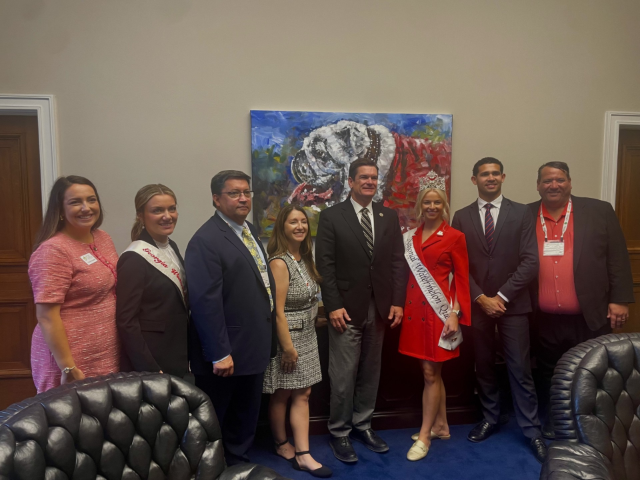
Meeting with the International Fresh Produce Association
Last week, I met with the International Fresh Produce Association. We were joined by Katelyn Lindsay, a fellow Georgian who was named “National Watermelon Queen” this year.
In the meeting, we discussed agriculture labor issues, the United States – Mexico – Canada Agreement, and crop protection tools.
 |
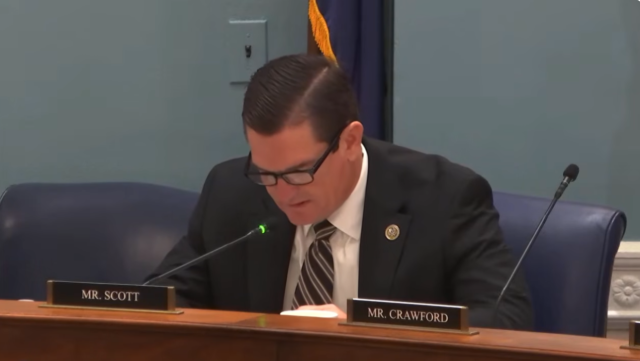
Asking Questions at House Agriculture Committee Hearing on the Future of the USMCA
Last week, the House Agriculture Committee held a hearing on the future of the United States – Mexico – Canada Agreement. Watch my full line of questioning here.
 |
Rollins touts deregulation, nutrition reset and ag labor reforms to produce sector
Agriculture Secretary Brooke Rollins used her time with the International Fresh Produce Association to highlight the administration’s deregulation push, as well as efforts to reshape federal nutrition policy, expand export markets, lower labor costs and support specialty crop producers.
Speaking at IFPA’s Washington Conference Wednesday morning before her appearance at the Senate Ag Committee, Rollins described agriculture as central to both national security and public health, arguing that the administration’s Make America Healthy Again movement is creating new opportunities for fruit and vegetable growers.
“We have carried out what will be remembered by the history books as the most significant reset of federal nutrition policy in American history,” Rollins said, pointing to the new dietary guidelines that emphasize nutrient-dense foods, including fruits and vegetables, while moving away from highly processed foods.
Rollins, echoing the message of Health and Human Services Secretary Robert F. Kennedy Jr. the day before, said USDA is working to align its nutrition programs with those priorities. That includes making changes to the Supplemental Nutrition Assistance Program’s retailer stocking requirements to ensure stores accepting SNAP benefits carry a broader range of staple foods, like more fresh produce, dairy and protein.
Rollins also promoted regenerative agriculture as a key component of the administration’s health agenda. USDA has committed more than $700 million through its Farmers First Regenerative Agriculture Pilot Program, primarily through the Environmental Quality Incentives Program and Conservation Stewardship Program. According to Rollins, there are over 600 EQIP contracts totaling about $128 million and another 239 CSP contracts worth more than $30 million.
She also criticized overregulation — particularly in California — which she says has driven up compliance costs and made it increasingly difficult for farmers to remain competitive.
“You know that this president’s top focus is deregulation and we have worked to implement that at USDA as well,” she said, encouraging those in attendance to share regulations that “are just dumb” with IFPA CEO Cathy Burns so they can be relayed to Rollins’ team at the Agriculture Department.
“I realize that probably some, especially in our bluer states, are maybe state rules that I don’t have complete or any control over. But even those rules will help us understand the greater complexity and context of what it is that we’re working to do to bring down the cost of business and to roll back government regulation,” Rollins said.
“No rule or regulation is too small for me to focus on,” she added.
The secretary pointed to labor costs as another major challenge facing specialty crop growers and praised the administration’s changes to the Adverse Effect Wage Rate used for H-2A guest workers. Rollins said the previous trajectory of wage increases was unsustainable and the administration is continuing to work with Congress on broader agricultural labor reforms.
House Agriculture Chairman Glenn “GT” Thompson, R-Pa., is calling to broaden a U.S. temporary agricultural worker program under a draft of a proposed ag labor bill, according to text obtained by Agri-Pulse. The proposal – which was developed from recommendations made in a 2024 final report from the House Ag Committee’s Agricultural Labor Working Group – would make it easier for dairies and other businesses to secure longer-term foreign guest workers despite employing temporary employees.
“Chairman Thompson has been dedicated to the agricultural labor issue despite it not being his jurisdiction, and I think that really shows how critical of an issue this is to our industry,” Samantha Ayoub, IFPA’s director of workforce and business policy, told Agri-Pulse on the sidelines of the event. “For produce specifically, we are highly perishable and largely hand-harvested across all of our sectors, so this is critical to our members as they head up to the Hill.”
More than 350 IFPA members are on Capitol Hill today delivering produce boxes to lawmakers and advocating for ag labor reform, protecting fruit and vegetable benefits in the Special Supplemental Nutrition Program for Women, Infants and Children, and increasing USDA purchases of fresh produce, among other priorities.
On trade, Rollins said she has several conversations each week with U.S. Trade Representative Jamison Greer to communicate the ag sector’s priorities. “One of the most important ways I believe we can secure future prosperity for our farmers is opening up new markets and export opportunities so that you all can compete over the long term,” she said.
Rollins also highlighted the record nearly $44 billion ag trade deficit, adding that “no dumping, no importing of things that move our producers out or block our producers” should be allowed.
That echoes the call of 79 House members led by Rep. Austin Scott, R-Ga., who are urging Greer to address what they describe as an “urgent crisis” facing specialty crop growers as Mexican imports continue to gain market share in the United States.
Read the full article here.
House Lawmakers Bring SSA Service Gaps to Light
A Congressional hearing this week cast a spotlight on the nation’s foster care youth, disabled military veterans, and children with sickle cell anemia.
Members of a joint subcommittee of the House Committee on Ways and Means told Social Security Administration (SSA) Commissioner Frank Bisignano in their opening statements that administrative barriers are adversely impacting these vulnerable Americans.
“As much as we might like to applaud efficiency wherever it can happen, the fact is that there are 5 million fellow Americans who get below-poverty-level checks from Social Security, and it’s been more than 55 years since Social Security has been enhanced to help the people who deserve it most,” Rep. John B. Larson (D-Conn.) said.
The efficiencies touted by the SSA include an 89 percent reduction in national 800-number telephone wait times, a 30 percent reduction in field office wait times and a 32 percent cut in the backlog on 1.27 million initial disability claims.
Rep. Danny Davis (D-Ill.) alleged that 75 percent of all children with severe sickle cell disease are initially denied Supplemental Security Income (SSI) disability benefits upon application and that families remain excluded from health care and financial support due to medical impairment listings.
“Many parents of these children must reduce their work hours to help them get the comprehensive care they need and of course, the kids have severe pain,” Davis said. “These parents depend on SSI to help pay the bill.”
Beyond denials, Rep. Jason Smith (R-Mo.) noted that SSA red tape is creating a challenge for disabled military veterans who want to return to work.
Some 60 percent of disability beneficiaries express a desire to work, according to House Committee on Ways and Means data.
Less than 1 percent actually leave the program due to confusing regulations that threaten their status.
“We recently advanced legislation sponsored by Congressman Austin Scott, a strong advocate for disabled veterans, authorizing your agency to once again test potential policy changes that might improve access and remove barriers to work for social security disability insurance beneficiaries,” Smith said.
The Purple Heart Freedom to Work Act that Smith referenced is pending review by the House Committee on Ways and Means.
While veterans struggle with complex SSA disability rules, Rep. Darin LaHood (R-Ill.) advocated for foster care children who purportedly encounter gaps in communication between state and federal systems that block their benefits.
“When you were here last year, you talked about the issue of children in foster care who receive Social Security survivor or SSI benefits and the importance of SSA working to increase the number of states that have data exchanges in place to ensure children in foster care get the help they need and I appreciate SSA’s attention to this issue and look forward to hearing any updates on where things stand with that,” LaHood said.
The House recently approved the Fostering the Future Act, which aims to improve outcomes for at-risk youth by modernizing the Chafee foster care program.
Also known as the John H. Chafee Foster Care Program for Successful Transition to Adulthood, the Chafee program helps with high school graduation, college preparation, career counseling, and job placement as well as finding and paying for safe housing, budgeting, and basic daily living needs.
Read the full article here.
| Washington D.C. 2185 Rayburn HOB Washington, DC 20515 Phone: (202) 225-6531 | Tifton District 127-B N. Central Ave. Tifton, GA 31794 Phone: (229) 396-5175 | Warner Robins 120 Byrd Way, Suite 100 Warner Robins, GA 31088 Phone: (478) 971-1776 |
________________________
For our Spanish speakers / Para nuestros hablantes de español
________________________
Actualización del Congresista Austin Scott – 15 de junio de 2026
El congresista Austin Scott informó a sus electores sobre diversas actividades legislativas y reuniones recientes en Washington, D.C.
Financiamiento para la Seguridad Fronteriza
Scott destacó que la Cámara de Representantes aprobó la Ley Secure America Act, legislación que financia al Servicio de Inmigración y Control de Aduanas (ICE) y a la Patrulla Fronteriza hasta septiembre de 2029. Según Scott, la medida garantiza que las agencias encargadas de la seguridad fronteriza cuenten con los recursos necesarios para cumplir su misión.
Reunión con Constructores de Georgia
El congresista se reunió con representantes de la Associated Builders and Contractors of Georgia, con quienes discutió temas relacionados con el desarrollo de la fuerza laboral, inmigración, política fiscal, atención médica, regulaciones gubernamentales y apoyo a la libre empresa dentro de la industria de la construcción.
Reunión con la Asociación Internacional de Productos Frescos
Scott también sostuvo una reunión con la International Fresh Produce Association (IFPA). Entre los temas discutidos estuvieron la mano de obra agrícola, el Tratado entre Estados Unidos, México y Canadá (USMCA) y herramientas de protección de cultivos. En el encuentro participó Katelyn Lindsay, una georgiana que actualmente ostenta el título de “National Watermelon Queen”.
Agricultura y Reforma Laboral
La secretaria de Agricultura de Estados Unidos, Brooke Rollins, presentó iniciativas destinadas a reducir regulaciones, reformar políticas nutricionales, ampliar mercados de exportación y apoyar a los productores agrícolas especializados.
Rollins destacó programas de agricultura regenerativa financiados por el Departamento de Agricultura (USDA), así como esfuerzos para reducir costos regulatorios y laborales. También expresó apoyo a reformas relacionadas con los trabajadores agrícolas temporales del programa H-2A.
Comercio Agrícola
La secretaria señaló la importancia de abrir nuevos mercados internacionales para los agricultores estadounidenses. Asimismo, expresó preocupación por el creciente déficit comercial agrícola y por el aumento de las importaciones agrícolas procedentes de México.
Scott lideró un grupo de 79 miembros de la Cámara que solicitaron a funcionarios federales abordar lo que describen como una crisis para los productores de cultivos especializados debido al aumento de las importaciones mexicanas.
Audiencia sobre la Administración del Seguro Social (SSA)
Durante una audiencia del Congreso, legisladores analizaron problemas que afectan a jóvenes en hogares de acogida, veteranos discapacitados y niños con anemia falciforme.
Los miembros del Congreso discutieron obstáculos administrativos dentro de la Administración del Seguro Social (SSA), incluyendo dificultades para acceder a beneficios y programas de apoyo.
Apoyo a Veteranos y Jóvenes en Hogares de Acogida
Scott fue reconocido por su patrocinio de la Purple Heart Freedom to Work Act, una propuesta legislativa destinada a facilitar que los veteranos discapacitados regresen al trabajo sin perder beneficios.
Los legisladores también debatieron iniciativas para mejorar los servicios y beneficios destinados a jóvenes que salen del sistema de hogares de acogida, incluyendo educación, capacitación laboral y acceso a vivienda.
Información de Contacto
El congresista recordó a los ciudadanos que sus oficinas en Washington, Warner Robins y Tifton permanecen disponibles para ayudar a los residentes que necesiten asistencia con agencias federales o deseen expresar inquietudes sobre asuntos gubernamentales.
Resumen en español asistido por Inteligencia Artificial (IA) para publicación por Lanier County News.