More Evil: Is God Dead?
By Ty B. Kerley,DMin / * Inglés y español | 
Critics of theism rightly ask, “Couldn’t God have created a world in which there was less evil and suffering?” Contrary to the assertion, this is not the best of all possible worlds God could have created. A world in which there was one more good angel or one more good person serving other people would certainly make the world better, wouldn’t it? Better yet, what if God interceded in the affairs of everyday life to eliminate or at least reduce the world’s suffering?That sounds great, but how would that work, exactly? God performing millions and millions of miracles every second, interceding constantly into people’s lives so that no evil touches them. That really wouldn’t be a world of free-willed beings, would it? Sounds more like the making of a cartoon to me. Instead, the natural laws that govern the world must be allowed to work if 1) our actions are going to have any meaning and 2) if God’s divine hiddenness is to be preserved. Even so, who knows just how much evil God does protect human beings from each day?
On the other hand, as Clay Jones argues, the suffering of a loved one is heart-wrenching, especially the suffering of a child, any child. But in reality, it is not just our own child that should not suffer, right? No child should suffer. But it is not just the children; our teenagers really should not suffer either. And it is not just our teenagers but also young mothers who should not suffer either. But it is not just the young mothers; young fathers should not suffer either, etc., and so on. At the end of the day,we think almost no one should suffer, and so we are full circle back to the beginning: all things considered, could God have created a world of free-willed beings in which there was less evil and suffering?
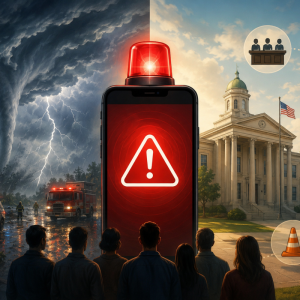
While we understand that moral evil is the evil that results from the free actions of significantly free beings choosing to do wrong, we have not mentioned the natural evil of hurricanes, tornados, floods, and diseases like cancer. Critic of Christianity Bart Erhman (we met him during our defense of the historical resurrection of Jesus) disagrees with the Free Will Defense and theodicy in general because he believes even if the Free Will Defense can explain moral evil in the world, what about all the suffering that is not covered by humans acting upon evil impulses? What about tsunamis, earthquakes, and mold? These evil things (natural evil) cause enormous suffering in the world. Who is responsible? The exercise of human free will cannot cause it. Nonetheless, all the same questions apply: if God is all-knowing, and all-powerful, and benevolent toward mankind, why does He allow these things to wreak havoc on man? Christians often respond with the words of the apostle Paul, who writes that Satan is “the god” of this world (cf 2 Cor 4:4), that he is “the prince of the power of the air” (Eph 2:2-4), and the “ruler of darkness of this world” (Eph 6:12). The early Christian theologian Augustine, working from these passages deduced that Satan and his cohorts, having rebelled against God and having “fallen,” have been multiplying natural evil ever since. Oddly enough, however, we can say that allnatural evil and the suffering caused by it is the byproduct of free-willed beings as well. In other words, natural evil is the result of the free-willed actions of Satan and the evil spiritual beings who bow down to him. Think of Job. All that befell Job and his family came about in the form of natural evil only through the hand of Satan.
Formally, the Free Will Defense conclusion states, “God is omniscient, omnipotent, and morally perfect: God has created the world; all the evil in the world is broadly moral evil [which includes natural evil]; and there is no possible world God could have created that contains a better balance of broadly moral good with respect to broadly moral evil.” It was Alvin Plantinga who crafted The Free Will Defense in 1974. Since then, most philosophers, both Christian and atheistic, agree that the argument is solid and the conclusion that the presence of evil in the world means that the claim that there is no God is false. Stated another way: There is no contradiction between the existence of an all-powerful God and suffering in the world. Today, only those lacking in information and perspective attempt to dispute The Free Will Defense. Going further into theodicy, there seem to be several reasons why God has morally sufficient reasons for allowing evil. Join us next week as we begin to investigate those reasons in God’s own words.
Gloria in excelsis Deo!
Ty B. Kerley,DMin., is an ordained minister who teaches Christian apologetics and relief preaches in Southern Oklahoma. Dr. Kerley and his wife, Vicki, are members of the Waurika church of Christ, and live in Ardmore, OK. You can contact him at [email protected].
________________________
For our Spanish speakers / Para nuestros hablantes de español
________________________
Más maldad: ¿Ha muerto Dios?
Por Ty B. Kerley, DMin — Traducción al español por IA
Los críticos del teísmo preguntan con razón: “¿No podría Dios haber creado un mundo en el que hubiera menos mal y sufrimiento?” Contrario a esa afirmación, este no es el mejor de todos los mundos posibles que Dios pudo haber creado. Un mundo en el que hubiera un ángel bueno más o una persona buena más sirviendo a los demás ciertamente haría el mundo mejor, ¿no es así? Mejor aún, ¿y si Dios interviniera en los asuntos de la vida cotidiana para eliminar o al menos reducir el sufrimiento del mundo? Eso suena bien, pero ¿cómo funcionaría exactamente? ¿Dios realizando millones y millones de milagros cada segundo, interviniendo constantemente en la vida de las personas para que ningún mal las toque? Eso realmente no sería un mundo de seres con libre albedrío, ¿verdad? A mí me suena más como la creación de una caricatura. En cambio, las leyes naturales que gobiernan el mundo deben poder operar si 1) nuestras acciones van a tener algún significado y 2) si la “ocultación divina” de Dios ha de preservarse. Aun así, ¿quién sabe cuánto mal protege Dios a los seres humanos cada día?
Por otro lado, como argumenta Clay Jones, el sufrimiento de un ser querido es desgarrador, especialmente el sufrimiento de un niño, de cualquier niño. Pero en realidad, no es solo nuestro propio hijo el que no debería sufrir, ¿verdad? Ningún niño debería sufrir. Pero no son solo los niños; nuestros adolescentes tampoco deberían sufrir. Y no son solo los adolescentes, sino también las madres jóvenes que no deberían sufrir. Pero no son solo las madres jóvenes; los padres jóvenes tampoco deberían sufrir, etcétera, y así sucesivamente. Al final del día, pensamos que casi nadie debería sufrir, y así volvemos al punto de partida: considerando todo, ¿podría Dios haber creado un mundo de seres con libre albedrío en el que hubiera menos mal y sufrimiento?
Aunque entendemos que el mal moral es el mal que resulta de las acciones libres de seres verdaderamente libres que eligen hacer el mal, no hemos mencionado el mal natural de huracanes, tornados, inundaciones y enfermedades como el cáncer. El crítico del cristianismo Bart Ehrman (a quien conocimos durante nuestra defensa de la resurrección histórica de Jesús) no está de acuerdo con la Defensa del Libre Albedrío ni con la teodicea en general, porque cree que incluso si la Defensa del Libre Albedrío puede explicar el mal moral en el mundo, ¿qué pasa con todo el sufrimiento que no es causado por las acciones humanas? ¿Qué pasa con los tsunamis, los terremotos y el moho? Estas cosas malas (mal natural) causan un enorme sufrimiento en el mundo. ¿Quién es responsable? El ejercicio del libre albedrío humano no puede causarlo. Sin embargo, las mismas preguntas siguen siendo válidas: si Dios es omnisciente, omnipotente y benevolente hacia la humanidad, ¿por qué permite que estas cosas causen estragos en el ser humano? Los cristianos a menudo responden con las palabras del apóstol Pablo, quien escribe que Satanás es “el dios de este mundo” (cf. 2 Cor 4:4), que es “el príncipe de la potestad del aire” (Ef 2:2-4), y el “gobernante de las tinieblas de este mundo” (Ef 6:12). El teólogo cristiano primitivo Agustín, basándose en estos pasajes, dedujo que Satanás y sus cohortes, habiéndose rebelado contra Dios y habiendo “caído”, han estado multiplicando el mal natural desde entonces. Curiosamente, sin embargo, podemos decir que todo el mal natural y el sufrimiento causado por él también es producto de seres con libre albedrío. En otras palabras, el mal natural es el resultado de las acciones libres de Satanás y de los seres espirituales malignos que se someten a él. Pensemos en Job. Todo lo que le ocurrió a Job y a su familia sucedió en forma de mal natural únicamente por la mano de Satanás.
Formalmente, la conclusión de la Defensa del Libre Albedrío afirma: “Dios es omnisciente, omnipotente y moralmente perfecto: Dios ha creado el mundo; todo el mal en el mundo es en sentido amplio mal moral [lo cual incluye el mal natural]; y no hay ningún mundo posible que Dios pudiera haber creado que contenga un mejor equilibrio de bien moral en sentido amplio con respecto al mal moral en sentido amplio.” Fue Alvin Plantinga quien formuló la Defensa del Libre Albedrío en 1974. Desde entonces, la mayoría de los filósofos, tanto cristianos como ateos, están de acuerdo en que el argumento es sólido y que la conclusión —que la presencia del mal en el mundo no demuestra que Dios no exista— es válida. Dicho de otra manera: no hay contradicción entre la existencia de un Dios todopoderoso y el sufrimiento en el mundo. Hoy en día, solo quienes carecen de información y perspectiva intentan refutar la Defensa del Libre Albedrío. Al profundizar más en la teodicea, parece haber varias razones por las cuales Dios tiene motivos moralmente suficientes para permitir el mal. Acompáñenos la próxima semana cuando comencemos a investigar esas razones en las propias palabras de Dios.
¡Gloria in excelsis Deo!
Ty B. Kerley, DMin., es un ministro ordenado que enseña apologética cristiana y predica de apoyo en el sur de Oklahoma. El Dr. Kerley y su esposa, Vicki, son miembros de la iglesia de Cristo en Waurika y viven en Ardmore, Oklahoma. Puede contactarlo en [email protected].