Deception by Mail: Florida Man Accused of $7 Million Webhosting Scam That Targeted America’s Small Businesses
By Carol A. Gasser Moore |
New York, NY – Federal prosecutors in Manhattan say a Florida man spent seven years preying on the trust of America’s small businesses, tricking tens of thousands into paying millions for services they never received.
According to the U.S. Attorney’s Office for the Southern District of New York, Robert W. Lederhilger III, 44, of Bradenton, Florida, is charged in connection with a mass-mailing scam that ran from 2015 to 2022. Authorities say Lederhilger mailed invoices disguised as renewal notices for webhosting services to small business owners across the country. The businesses, many of which already had legitimate websites, believed the bills were real—and paid them. 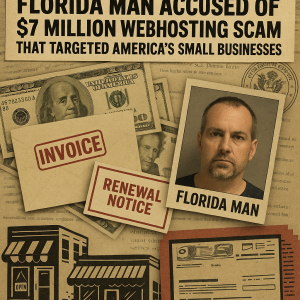
But prosecutors say those payments, totaling about $7 million across more than 38,000 transactions, bought nothing. No websites were hosted. No services were rendered. Victims instead received fresh “renewal” invoices a year later, asking for more money.
“This was a betrayal of the entrepreneurial spirit that fuels communities,” prosecutors argued. “Small businesses, already working hard to survive, were drained of scarce resources through lies.”
Lederhilger allegedly used a string of company names—ranging from “Web Host Agents” to “Total Host Pro”—to keep the scam alive. He worked with a mass-printing company in Georgia to flood mailboxes nationwide with fraudulent invoices designed to look official.
The Legal Stakes
Lederhilger was arrested in March 2023 and indicted on one count of mail fraud, a federal felony that carries a maximum sentence of 20 years in prison. He has pleaded not guilty, and the case, presided over by U.S. District Judge Andrew L. Carter, remains ongoing.
No conviction has yet been recorded, despite prior claims circulating online. As of now, the case is still in progress and no sentencing has been scheduled.
The Victims
For the small businesses—many family-run operations—the scam wasn’t just about lost money. Owners say it shattered their trust. One victim described feeling “violated twice over—first by losing money, then by realizing someone thought we were so disposable.”
What’s Next
The Southern District’s General Crimes Unit continues to prosecute the case, with assistance from the U.S. Postal Inspection Service, which played a leading role in investigating the scheme.
If convicted, Lederhilger faces not only prison but likely orders to repay millions in restitution. For thousands of businesses, the case represents more than justice—it represents a fight to restore faith in the integrity of the American marketplace.