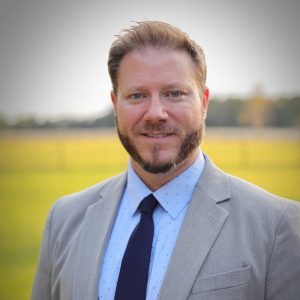
An Update from Congressman Austin Scott *
* Inglés y español |
July 20, 2026
Dear Georgian,
Last week, President Trump addressed the nation and discussed attempts to interfere in our elections by our adversaries including China, Russia, Iran, and North Korea. This is a sobering reminder for every American that our election apparatus has real vulnerabilities.
The State of Georgia has set the example by passing the Election Integrity Act of 2021, which made it easier to vote and harder to cheat in our state. President Trump’s announcement should unite every American in a desire to protect our most precious institution from foreign influence.
For our republic to function properly, Americans must have confidence on the way to the ballot box. Anything less than that only erodes our electoral process, and our republic with it.
As always, my staff and I are here to help. If you need assistance with a federal agency or have comments or concerns to share with me, please do not hesitate to call my Warner Robins, Tifton, or Washington, D.C. offices. To receive frequent updates, I encourage you to visit my website, like my Facebook page, follow me on YouTube, and follow me on Twitter.
Keep reading for the full update.
Sincerely,
Congressman Austin Scott
 |
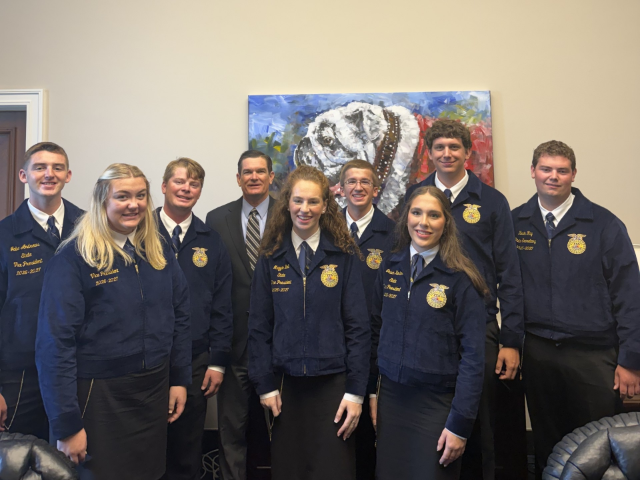
Speaking with Georgia FFA State Officers
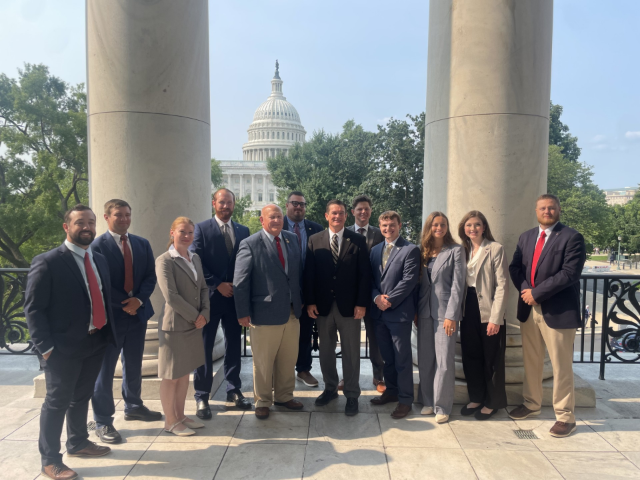
Last Wednesday, I had the pleasure of meeting with the Georgia State officers of the Future Farmers of America. This group of bright young Georgians included three of our own from Georgia’s Eighth District, Maggie Bell, Thomas Hogan, and Chloe Rogers.
The Future Farmers of America organization does a fantastic job of educating and raising up the next generation of producers and growers for our country. Their work is important and helps keep our agriculture industry flourishing.
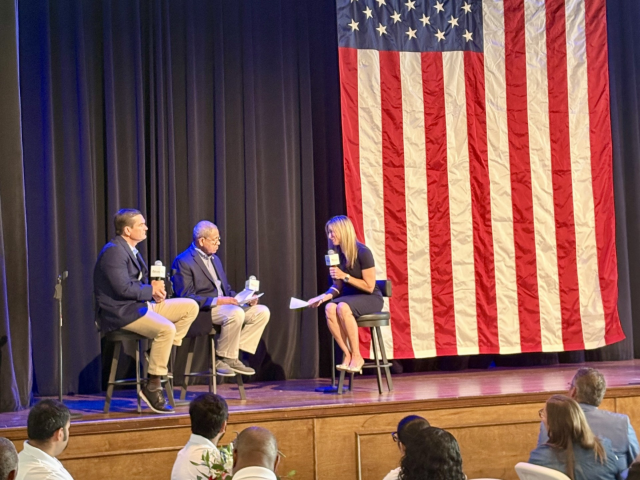
Joining Rep. Sanford Bishop at MCLB Albany
Last Friday, I joined Rep. Sanford Bishop (GA-02) for a discussion about national security with both leaders from Marine Corp Logistics Base and Albany Chamber of Commerce
This was a great event where we discussed the importance of logistics to our military, the role MCLB Albany plays in our military operations, and what we can do in Washington to continue providing support for the mission and our national security.
Meeting with the Texas Farm Bureau
Last week, I met with the Texas Farm Bureau, and we were joined by the House Agriculture Committee Chairman GT Thompson (PA-05).
We discussed the farm bill that has passed out of the House of Representatives, the new world screwworm that is causing major disruptions in Texas, and other issues relevant to America’s agriculture industry.
 |
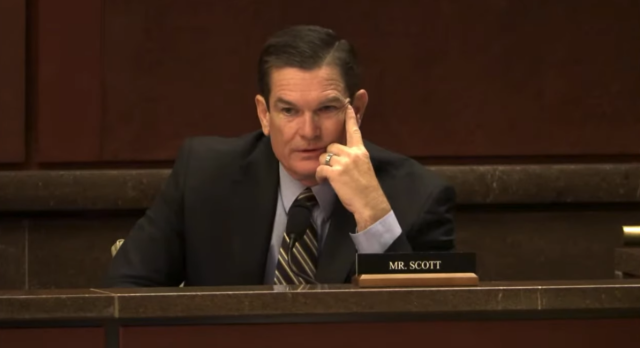
Asking Questions at House Permanent Select Committee on Intelligence Open Hearing
The House Permanent Select Committee on Intelligence held an open hearing, last week, focusing on the efforts our states are making in counterintelligence.
Watch my full questions here.
 |
House Judiciary Approves Bill Establishing Right to Sue for Damages on Trans Surgery
House Judiciary Committee Republicans unanimously approved a legislative proposal Wednesday that establishes a Private Right of Action enabling an individual child, or her parents or guardian, to seek compensatory damages from a provider of transgender surgery or treatments.
“An individual subjected as a child to a covered intervention, or the parents or legal guardians of such individual, may bring a civil action in an appropriate district court of the United States for damages against any health care professional, hospital, or clinic who participates in the covered intervention on that child. Such a cause of action shall be available regardless of whether the alleged covered intervention occurred before, on, or after the date of enactment of this Act,” the proposal states, entitled the “Chloe Cole Act of 2026,” introduced by Rep. Bob Onder (R-Wis.) and co-sponsored by 86 other House Republicans.
All eight of the Democratic members of the judiciary panel opposed the 15 Republicans after the mark-up process. Typically, the next stop for the measure would be the House Rules Committee, which would determine how it would be reported to and considered by the full House. House Republican leaders have the controlling vote on if or when the proposal comes to the full House.
In a statement released by the Independent Women’s Forum (IWF), Onder said, “It is unacceptable that politics and ideology have been allowed to override sound medical judgment, leaving vulnerable children to undergo irreversible procedures without a comprehensive psychological evaluation, treatment of underlying mental health conditions, or truly informed parental consent. Children deserve medical care grounded in scientific evidence, not experimental interventions driven by biased agendas. The Chloe Cole Act would allow families to hold clinics and hospitals accountable and ensure victims have adequate time to seek justice,” he insisted. “This legislation is urgently needed, and I am proud that the House Judiciary Committee has advanced this critical bill so we can continue fighting to protect children and hold those who harmed them accountable.”
Onder introduced the proposal in the House in February following President Donald Trump’s issuance of Executive Order 14187, which provided a comprehensive statement of opposition to all forms of transgender surgery and treatment on minors, subject to exceptions such as individuals born with both male and female genitalia.
Trump signed the order because, according to the text, “Across the country today, medical professionals are maiming and sterilizing a growing number of impressionable children under the radical and false claim that adults can change a child’s sex through a series of irreversible medical interventions. This dangerous trend will be a stain on our Nation’s history, and it must end.”
The EO continued, “Countless children soon regret that they have been mutilated and begin to grasp the horrifying tragedy that they will never be able to conceive children of their own or nurture their children through breastfeeding. Moreover, these vulnerable youths’ medical bills may rise throughout their lifetimes, as they are often trapped with lifelong medical complications, a losing war with their own bodies, and, tragically, sterilization.”
It is difficult to know with precision how many minors have experienced transgender surgery in recent years. The largest estimate was issued in October 2024 by Do No Harm, an advocacy group consisting of medical professionals. The Do No Harm database included nearly 5,800 cases of minors receiving gender transition operations and treatment between 2019 and 2023.
Do No Harm, which is based in Salt Lake City, Utah, backs congressional passage of the Chloe Cole Act, and its Chief Medical Officer, Dr. Kurt Miceli, applauded “the elected officials who are fighting for The Chloe Cole Act, which establishes a private right of action for individuals who were harmed as vulnerable children by the sex-change industry. For too long the scandal of sex-rejecting procedures on minors has proliferated to an alarming degree through misinformation and pseudoscience.”
He continued, “These interventions carry significant risks, cause great harms, and often do irreversible damage. Passing The Chloe Cole Act will not only establish a strong deterrent against sex-rejecting procedures in minors by exposing harmful actors to real legal accountability but also mark a meaningful step toward justice for those harmed by the child sex-change industry.”
The Onder proposal is named after Chloe Cole, a self-described 22-year-old “detrans kid,” who, at age 13, began undergoing puberty-blocking and testosterone treatments, and then at age 15 suffered an irreversible double mastectomy. At age 18, she became a national advocate for the growing number of transitioned minors who regret having undergone the controversial procedures.
Chloe, who is a participant in IWF advocacy programs, said of the mark-up vote, “It means more than I can put into words to see the Chloe Cole Act introduced to potentially be made into U.S. law. While I never wanted my story to become the reason this bill exists, I hope it helps ensure that fewer children experience the lifelong consequences that I have.”
And in a statement issued earlier this year by Onder, Chloe observed: “While we’ve made significant strides in raising awareness and enacting protections in recent years, the fight is far from over. Too many children remain at risk of irreversible harm from puberty blockers, cross-sex hormones, and surgical procedures pushed on them before they can fully understand the consequences. Reintroducing this bill is a vital step in our mission to ensure that no minor in America ever endures the kind of lasting, irreparable damage I experienced,” she underscored. “We must finish what we’ve started and safeguard the next generation from these experimental and barbaric treatments,” Cole said in the statement issued by Onder.
House Judiciary Chairman Jim Jordan (R-Ohio) told The Washington Stand that he applauds “Representative Onder’s leadership on guiding the Chloe Cole Act through our committee. This crucial bill will protect vulnerable children.” Rep. Mark Harris (R-N.C.) agreed, reiterating to TWS that “every child deserves the chance to grow up as God created them — not be subjected to drugs and irreversible procedures that can cause lifelong harm. The Chloe Cole Act will protect vulnerable children, give victims and their families a path to justice, and hold accountable the clinics and medical providers responsible for these unethical procedures. I thank Congressman Onder for his leadership and was proud to support his legislation’s passage out of committee.”
Should the proposal be considered by the rules panel, six of the nine members of the Republican majority, including Vice Chairman Morgan Griffith (R-Va.), are co-sponsors, including Reps. Ralph Norman of South Carolina, Austin Scott of Georgia, Chip Roy of Texas, Erin Houchin of Indiana, and Brian Jack of Georgia.
Scott told TWS Thursday that “our kids must be protected from the harms of transgender ideology. The Chloe Cole Act provides a framework for families to fight against harmful, irreversible medical procedures on minors, while ensuring medical accountability and protecting kids from irreversible harm.”
Read the full article here.
House GOP fast-tracks reconciliation 3.0 with farm aid, Save America Act
House Speaker Mike Johnson, R-La., says a Republican plan to fast-track a sweeping spending package that includes key agriculture investments is the party’s “best shot” at delivering President Donald Trump’s top goal of revamping U.S. election laws.
The bill, dubbed “reconciliation 3.0,” will be written by the House Agriculture, Armed Services, Intelligence and Administration committees, Johnson said following a GOP Conference meeting with Vice President JD Vance.
Vance told reporters Wednesday that he wanted to visit with GOP lawmakers on Capitol Hill “to give a message of unity to my fellow Republicans.”
“We’ve accomplished a lot together over the last year and a half, but we’ve got to stick together and accomplish one – at least one – very big thing for the American people, which is the president’s priority, the White House’s priority, the entire Trump administration’s priority, to actually get the Save America Act passed.”
The bill would require documentary proof of U.S. citizenship when registering to vote, and photo identification to vote in federal elections.
The second goal of the bill is to provide supplemental funding for U.S. troops and American farmers, according to Johnson.
“It’s a shame that the Democrats aren’t going to help us get this done, given that a majority of Democrat voters actually want us to have election integrity in this country, but we’ve got a good piece of legislation to support the troops, support the farmers, and get the Save America Act passed,” Vance said.
Discussing a congressional task force that is seeking to go after fraudulent activity in programs like Medicare and Medicaid as a way to pay for the bill, Vance said while fraud is an important issue, the current plan is seen as the strongest path forward.
“We’re certainly going to take up the fraud task force, and we talked about actually working with some more congressional colleagues to make that happen in the future, into the fall,” Vance said.
Trump last month formally asked Congress to pass an $87.6 billion supplemental spending request to address the cost of the war in Iran that also called for $11.1 billion in additional farm aid and year-round, voluntary sales of higher ethanol blends, known as E15.
The reconciliation package would allow the House Agriculture Committee to boost federal funding by a maximum of $12 billion over the fiscal year 2027-fiscal year 2036 period. House Agriculture Committee Chairman Glenn “GT” Thompson, R-Pa., said reconciliation 3.0 will be the vehicle for the long-awaited farm aid package.
Thompson has a fast timeline for distributing the aid.
“Obviously as quickly as possible,” Thompson said when asked by Agri-Pulse how quickly he wants the money to reach farmers. “Yeah, they need it now.”
Farmers are increasingly relying on ad hoc farm assistance amid dangerous weather patterns, unsteady trade markets, high input costs and the added impact of the war with Iran on fuel and fertilizer prices. Thompson said the funds will go to farmers impacted by trade, the weather and economic harm.
The latest tranche of aid was announced in December 2025. The funds were issued by the USDA using funds from Agriculture Secretary Brooke Rollins’ Section 5 authority through the Commodity Credit Corporation. The department’s Farm Service Agency launched the Farmer Bridge Assistance Program to provide a one-time payment for traditional row crop farmers, amounting to $11 billion in aid. The program also provided $1.625 billion for specialty crops.
Thompson said “we’re going to see” if the latest batch of aid through the reconciliation package will be distributed through FBA or another USDA program.
“We have to take into consideration the need for row crops, specialty crops and sawmills,” he said. Thompson is unsure how much money he wants to provide to specialty crop producers, though he previously called for $5 billion. “Now that I’ve been given a number, we’ll have to see,” he said.
The Specialty Crop Farm Bill Alliance in January put out a press release urging Congress to provide at least $5 billion in aid for specialty crops.
“This support is critical to the continued sustainability of American agriculture and the communities specialty crop growers serve,” SCFBA wrote at the time. “Specialty crops – including fruits, vegetables, tree nuts, nursery, greenhouse, and floriculture products – generate more than $75 billion annually in U.S. agricultural cash receipts, account for more than one-third of all U.S. crop sales, and support rural economies nationwide.”
The specifics of what the ag portion of the legislation will include remains to be seen. Thompson will have to figure out how to divvy up the monies.
House Agriculture General Farm Commodities, Risk Management, and Credit Subcommittee Chairman Austin Scott, R-Ga., said in a statement to Agri-Pulse that he is looking forward to working with his colleagues to address the “challenges threatening our U.S. farm economy” as the reconciliation process continues.
“This reconciliation framework provides $12 billion for targeted investments in agriculture policy and gives the House Agriculture Committee the ability to build upon the work we’ve done to support our nation’s farmers,” Scott said.
Committee Democrats appear out of the loop on the farm aid reconciliation resolution.
Rep. Alma Adams, D-N.C., and Jim McGovern, D-Mass., both said they hadn’t seen the legislation as of Wednesday afternoon.
The $12 billion number might be too low for Democrats to back. McGovern said he doesn’t think that is enough money to help out farm country, but he declined to comment more on the package until he’s had a chance to review it.
Thompson declined to say if he thinks the $12 billion will be enough for farm country. “That’s the number I had to work with,” he said.
Reconciliation 3.0 could be met with some GOP resistance because it lacks an offset, meaning it will be adding to the deficit without finding savings elsewhere. Thompson didn’t seem concerned about a lack of offset.
“Not my call. That’s really the administration’s call,” Thompson said. “I just appreciate the fact that the strength of the agriculture – the farm coalition – was recognized and was included within this package. It’s a pretty narrow package.”
The reconciliation plan addresses funding for the military and agriculture producers. Any attempt to add E15 to the reconciliation bill is likely to be met with resistance given that none of the four committees writing the legislation has jurisdiction over the issue.
Other congressional committees also will be allowed to increase funding levels: House Armed Services Committee, $60 billion; House Permanent Select Committee on Intelligence, $13 billion; and House Administration Committee, $10 billion for the Save America Act.
Johnson said the House Budget Committee is expected to approve a budget resolution Thursday, with the full House passing it next week. The measure would then go to the Senate, where the goal is to pass it before the next recess starts in early August. Then the four instructed House committees will start writing the reconciliation bill itself, he said.
Read the full article here.
| Washington D.C. 2185 Rayburn HOB Washington, DC 20515 Phone: (202) 225-6531 | Tifton District 127-B N. Central Ave. Tifton, GA 31794 Phone: (229) 396-5175 | Warner Robins 120 Byrd Way, Suite 100 Warner Robins, GA 31088 Phone: (478) 971-1776 |
________________________
For our Spanish speakers / Para nuestros hablantes de español
________________________
Una Actualización del Congresista Austin Scott
Inglés y español | Traducción al español asistida por IA
20 de julio de 2026
Estimados georgianos:
La semana pasada, el presidente Donald Trump se dirigió a la nación y habló sobre los intentos de interferencia en nuestras elecciones por parte de adversarios extranjeros, incluidos China, Rusia, Irán y Corea del Norte. Se trata de un recordatorio preocupante para todos los estadounidenses de que nuestro sistema electoral presenta vulnerabilidades reales.
El estado de Georgia ha servido de ejemplo al aprobar la Ley de Integridad Electoral de 2021, la cual facilitó el voto legal al tiempo que fortaleció las medidas para prevenir el fraude electoral. El anuncio del presidente Trump debería unir a todos los estadounidenses en el deseo de proteger nuestra institución más preciada de la influencia extranjera.
Para que nuestra república funcione correctamente, los estadounidenses deben tener confianza en el proceso electoral. Cualquier cosa menos que eso solo debilita nuestro sistema democrático y nuestra república.
Como siempre, mi equipo y yo estamos aquí para ayudar. Si necesita asistencia con alguna agencia federal o desea compartir sus comentarios o inquietudes, no dude en comunicarse con nuestras oficinas en Warner Robins, Tifton o Washington, D.C. Para recibir actualizaciones frecuentes, lo invito a visitar mi sitio web y seguirme en mis redes sociales.
Reunión con los Oficiales Estatales de Georgia FFA
El miércoles pasado tuve el placer de reunirme con los oficiales estatales de Future Farmers of America (FFA) de Georgia. Entre este destacado grupo de jóvenes georgianos se encontraban tres estudiantes del Octavo Distrito Congresional: Maggie Bell, Thomas Hogan y Chloe Rogers.
La organización FFA realiza una labor extraordinaria formando a la próxima generación de productores y agricultores estadounidenses. Su trabajo es fundamental para mantener fuerte y próspera nuestra industria agrícola.
Reunión con el Representante Sanford Bishop en MCLB Albany
El viernes pasado me uní al representante Sanford Bishop (GA-02) para dialogar sobre seguridad nacional con líderes de la Base Logística del Cuerpo de Marines en Albany (MCLB Albany) y de la Cámara de Comercio de Albany.
Durante el encuentro analizamos la importancia de la logística para nuestras Fuerzas Armadas, el papel estratégico que desempeña MCLB Albany y las acciones que el Congreso puede tomar para continuar apoyando esa misión y fortalecer la seguridad nacional.
Reunión con la Oficina Agrícola de Texas
La semana pasada también me reuní con representantes de la Texas Farm Bureau, junto con el presidente del Comité de Agricultura de la Cámara de Representantes, G.T. Thompson (PA-05).
Conversamos sobre el proyecto de Ley Agrícola aprobado por la Cámara, la nueva plaga del gusano barrenador del ganado (New World Screwworm) que está causando importantes problemas en Texas y otros asuntos relevantes para la agricultura estadounidense.
Audiencia Pública del Comité Permanente Selecto de Inteligencia
El Comité Permanente Selecto de Inteligencia de la Cámara celebró una audiencia pública enfocada en los esfuerzos de los estados para fortalecer la contrainteligencia y proteger la seguridad nacional.
Los ciudadanos interesados pueden ver mis preguntas completas en el enlace disponible en mi sitio web.
Comité Judicial Aprueba la “Ley Chloe Cole de 2026”
Los republicanos del Comité Judicial de la Cámara aprobaron por unanimidad una propuesta legislativa denominada Ley Chloe Cole de 2026, la cual crearía un derecho privado de acción para que personas que, siendo menores de edad, recibieron cirugías o tratamientos relacionados con la transición de género, o sus padres o tutores, puedan presentar demandas civiles para reclamar daños y perjuicios contra hospitales, clínicas o profesionales de la salud que participaron en esos procedimientos. La propuesta aún deberá avanzar en el proceso legislativo antes de ser considerada por toda la Cámara.
Republicanos Impulsan el Paquete Presupuestario “Reconciliation 3.0”
El presidente de la Cámara, Mike Johnson, anunció un nuevo paquete legislativo conocido como “Reconciliation 3.0”, que busca financiar prioridades relacionadas con la agricultura, las Fuerzas Armadas y reformas electorales.
Entre las propuestas se incluyen:
- Exigir prueba documental de ciudadanía estadounidense para registrarse para votar.
- Requerir identificación con fotografía para votar en elecciones federales.
- Destinar fondos adicionales para apoyar a agricultores estadounidenses y fortalecer a las Fuerzas Armadas.
- Autorizar hasta 12 mil millones de dólares para inversiones agrícolas entre los años fiscales 2027 y 2036.
Como presidente del Subcomité de Productos Agrícolas, Manejo de Riesgos y Crédito del Comité de Agricultura de la Cámara, expresé mi respaldo al plan.
“Este marco de reconciliación proporciona 12 mil millones de dólares para inversiones específicas en políticas agrícolas y permite al Comité de Agricultura continuar fortaleciendo el trabajo que hemos realizado para apoyar a los agricultores de nuestra nación”, señalé.
El liderazgo republicano espera que la resolución presupuestaria sea aprobada por la Cámara y posteriormente enviada al Senado antes del receso legislativo de agosto. Después de ello, comenzará la redacción formal del paquete de reconciliación.
Oficinas del Congresista Austin Scott
Washington, D.C.
2185 Rayburn House Office Building
Washington, DC 20515
Teléfono: (202) 225-6531
Tifton
127-B North Central Avenue
Tifton, GA 31794
Teléfono: (229) 396-5175
Warner Robins
120 Byrd Way, Suite 100
Warner Robins, GA 31088
Teléfono: (478) 971-1776