Lanier, Berrien voters may get chance to vote on sales tax aimed at lowering homeowner taxes *
By T.S. Carter / * Inglés y español |
LANIER and BERRIEN COUNTIES, Ga. – A looming decision at the Georgia Capitol could give Lanier, Berrien and other counties a choice between two very different approaches to property tax relief: one that spreads the benefit broadly across all property owners, and another that targets relief almost exclusively to homeowners, who reside in their own home. 
The issue is hardly a week old, but has already put the Lakeland City Council and Lanier County Commission at odds.
The split is over selection of the Floating Local Option Sales Tax, or FLOST, which gives tax relief to both residential and commercial property owners, including buildings and grounds that owners lease to businesses as well as agricultural properties. The other selection is the Local Homestead Option Sales Tax, or LHOST. It limits the tax relief to owner-occupied homes.
Lakeland council members prefer asking voters to approve the Floating Local Option Sales Tax because it benefits both homeowners and commercial property owners as well as businesses and agriculture operations.
The Local Homestead Special Option Sales Tax, benefits too few taxpayers in the city and county while burdening the rest of the population with an extra penny sales tax, Lakeland council members say. They cite property statistics that show that only about 20 percent of homes in South Georgia qualify for a homestead exemption, a designation that requires the homeowner to occupy the home.
On the other hand, the Lanier County Commission is leaning toward the Local Homestead Special Sales Tax Option, said commission Chairman Alex Lee in a conference call with city council members Wednesday night, during its regularly schedule city council meeting.
Lanier County and Lakeland would have the option of letting voters decide on either a FLOST or a LHOST. Or they could put neither before voters.
In Lanier, a Local Homestead Local Option Sales Tax could give county commissioners an opportunity to tout efforts to lower property taxes for people who qualify for the homestead exemption.
If the Board of County Commissioners put the LHOST before voters, Lakeland would be limited to supporting placement of the measure on a referendum ballot or opting out of the LHOST altogether, city officials say.
Meanwhile, for Berrien County, the choice would be whether to keep a Floating Local Option Sales Tax that voters approved last November or select the Local Homestead Option Sales Tax.
Berrien County could decide to leave its FLOST in place. But if its elected leaders opt to replace it with a Local Homestead Special Sales Tax, county voters must decide to adopt or reject a LHOST in the November 3 general election.
Gov. Brian Kemp recently added the LHOST to a special session beginning June 17 aimed at redrawing the state’s political map and addressing election ballot QR codes. Legislators granted the option for a FLOST in a previous session.
The new additions include language that allow lawmakers to confirm appointments made by Kemp since the Legislature adjourned in early April and formally approve the gas tax suspension Kemp issued through an emergency order that ended on June 2, the Georgia Recorder reported.
The option for counties to allow the Local Homestead Option Sales Tax on the November ballot comes from Senate Bill 33.
For counties like Berrien and its municipalities of Enigma, Nashville and Ray City that have already approved a Floating Local Option Sales Tax, approval of a LHOST would shift tax revenue from the Floating Option Sales Tax sales tax to the LHOST. That measure would provide targeted relief to homeowners who occupy their homes.
By levying the LHOST in place of the FLOST, localities could avoid increasing the amount of sales tax people pay, the Georgia Recorder digital newspaper reported.
A referendum vote on a LHOST could be expected to draw opposition from businesses, landlords and agricultural property owners who are relying on the Floating Local Option Sales Tax to offset some of their property taxes.
Berrien County residents will be paying one penny more in sales tax in coming years to help reduce property taxes in both incorporated and unincorporated areas.
The Floating Local Option Sales Tax of 1-cents won easily last November with 1,332 voters marking “Yes” and 468 marking “No”.
As a result, Berrien County’s sales tax will rise to 9 cents. In exchange, an amount reflecting the money raised from the penny tax was to be taken off the county’s tax, or millage, rate starting in January 2026 and running through December 2030. The 2027 property tax year is to be the first year to reflect the rate lowered by the sales tax collections.
The governing bodies and municipalities in Berrien and Lanier counties could put the sales tax selection to voters in November or they could wait until next year, according to Senate Bill 33. Or they could do neither, the new law says.
Elections supervisors in each county say their respective elected leaders must give them the green light 90 days ahead of the November 3 general election.
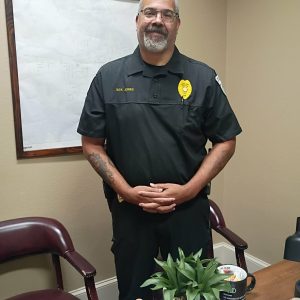
Melanie Ray, Berrien County Elections Supervisor

“It is typically 90 days to get a question on the ballot,” said Melanie Ray, Berrien supervisor of election, in an interview.
To set a vote on a Local Homestead Special Option Sales Tax, county commissioners would need to pass a resolution and forward it to the Georgia Secretary of State. The Secretary of State’s Office would then notify the Elections Office.
The role of the Elections Office is simply to ensure a fair election and an accurate vote count, according to Ray. “Our office just conducts the referendum. We don’t determine what goes on the ballot,” she said.
In Lanier County, Elections Supervisor James Barnes expects the issue could make the ballot in time, though he noted his office is busy preparing for a runoff election for the Republican Primary Public Service District 5 runoff on June 16. The runoff candidates are Josh Tolbert, an engineer and former candidate for the Georgia Senate, and business owner Bobby Mehan.
James Barnes, Lanier County Elections Supervisor

Tolbert finished first with about 47% of the vote, and Mehan finished second. The failure of either candidate to notch 50% of the vote triggered the runoff requirement.
The winner of the runoff will advance to the November general election against Democratic nominee Shelia Edwards.
The need for the Republican primary District 3 recount came when the vote margin was sufficiently close enough to require the recount. The candidates are Fitz Johnson, a former PSC commissioner appointed by Gov. Kemp and later defeated in the 2025 general election, and Brandon Martin, a financier/businessman.
________________________
For our Spanish speakers / Para nuestros hablantes de español
________________________
Los votantes de Lanier y Berrien podrían tener la oportunidad de decidir sobre un impuesto a las ventas destinado a reducir los impuestos sobre la propiedad
Por T.S. Carter / Inglés y español
Traducción al español asistida por Inteligencia Artificial (IA).
CONDADOS DE LANIER Y BERRIEN, Georgia — Una decisión que se avecina en el Capitolio de Georgia podría dar a los condados de Lanier, Berrien y otros la posibilidad de elegir entre dos enfoques muy diferentes para aliviar los impuestos sobre la propiedad: uno que distribuye el beneficio de manera amplia entre todos los propietarios y otro que concentra el alivio casi exclusivamente en los propietarios de viviendas que residen en ellas.
El tema apenas tiene una semana de antigüedad, pero ya ha generado desacuerdos entre el Concejo Municipal de Lakeland y la Comisión del Condado de Lanier.
La división gira en torno a la selección del Impuesto Local Opcional sobre las Ventas Flotante (Floating Local Option Sales Tax, FLOST), que proporciona alivio fiscal tanto a propietarios residenciales como comerciales, incluyendo edificios y terrenos arrendados a empresas, así como propiedades agrícolas. La otra opción es el Impuesto Local Opcional sobre las Ventas para Exención de Vivienda Principal (Local Homestead Option Sales Tax, LHOST), que limita el alivio fiscal a las viviendas ocupadas por sus propietarios.
Los miembros del Concejo Municipal de Lakeland prefieren pedir a los votantes que aprueben el FLOST porque beneficia tanto a propietarios de viviendas como a propietarios comerciales, empresas y operaciones agrícolas.
Según los concejales, el LHOST beneficiaría a muy pocos contribuyentes de la ciudad y el condado, mientras impondría al resto de la población un impuesto adicional de un centavo sobre las ventas. Citan estadísticas de propiedades que muestran que solo alrededor del 20 por ciento de las viviendas del sur de Georgia califican para la exención de vivienda principal, una designación que exige que el propietario habite la vivienda.
Por otro lado, la Comisión del Condado de Lanier se inclina por el LHOST, según indicó el presidente de la comisión, Alex Lee, durante una conferencia telefónica con miembros del concejo municipal el miércoles por la noche, en el marco de la reunión ordinaria del concejo.
Lanier y Lakeland tendrían la opción de permitir que los votantes decidan entre un FLOST o un LHOST. También podrían optar por no presentar ninguna de las dos medidas a votación.
En Lanier, un LHOST podría brindar a los comisionados la oportunidad de destacar sus esfuerzos por reducir los impuestos sobre la propiedad para quienes califican para la exención de vivienda principal.
Si la Junta de Comisionados del Condado presenta el LHOST a los votantes, Lakeland estaría limitada a apoyar la inclusión de la medida en una boleta de referéndum o a excluirse completamente del programa, según funcionarios municipales.
Mientras tanto, en el condado de Berrien, la decisión sería mantener el FLOST aprobado por los votantes el pasado noviembre o elegir el LHOST.
Berrien podría decidir mantener su FLOST vigente. Sin embargo, si sus líderes electos optan por reemplazarlo con un LHOST, los votantes del condado deberán decidir si lo adoptan o lo rechazan en las elecciones generales del 3 de noviembre.
El gobernador Brian Kemp agregó recientemente el LHOST a una sesión especial que comenzará el 17 de junio y que está destinada a rediseñar el mapa político estatal y abordar cuestiones relacionadas con los códigos QR en las boletas electorales. Los legisladores habían autorizado previamente la opción del FLOST en una sesión anterior.
Las nuevas disposiciones también incluyen lenguaje que permite a los legisladores confirmar nombramientos realizados por Kemp desde que la Legislatura suspendió sesiones a principios de abril y aprobar formalmente la suspensión temporal del impuesto a la gasolina que Kemp implementó mediante una orden de emergencia y que finalizó el 2 de junio, informó Georgia Recorder.
La posibilidad de que los condados sometan el LHOST a votación en noviembre proviene del Proyecto de Ley del Senado 33 (Senate Bill 33).
Para condados como Berrien y sus municipios de Enigma, Nashville y Ray City, que ya aprobaron un FLOST, la adopción de un LHOST trasladaría los ingresos fiscales actualmente generados por el FLOST hacia el nuevo programa. Esa medida proporcionaría alivio fiscal específico a los propietarios que viven en sus viviendas.
Al aplicar el LHOST en lugar del FLOST, las localidades podrían evitar aumentar la cantidad total de impuestos sobre las ventas que pagan los consumidores, según informó el periódico digital Georgia Recorder.
Se espera que una votación sobre el LHOST genere oposición de empresas, propietarios que alquilan inmuebles y propietarios agrícolas que actualmente dependen del FLOST para compensar parte de sus impuestos sobre la propiedad.
Los residentes del condado de Berrien pagarán un centavo adicional en impuestos sobre las ventas durante los próximos años para ayudar a reducir los impuestos sobre la propiedad tanto en áreas incorporadas como no incorporadas.
El FLOST de un centavo fue aprobado cómodamente el pasado noviembre con 1,332 votos a favor y 468 en contra.
Como resultado, el impuesto sobre las ventas en Berrien aumentará a 9 centavos. A cambio, una cantidad equivalente a los ingresos generados por ese centavo adicional deberá descontarse de la tasa impositiva del condado (millage rate) desde enero de 2026 hasta diciembre de 2030. El año fiscal de propiedad 2027 será el primero en reflejar la reducción de la tasa gracias a la recaudación del impuesto sobre las ventas.
Los gobiernos locales y municipios de los condados de Berrien y Lanier pueden someter la selección del impuesto a los votantes en noviembre o esperar hasta el próximo año, según la Ley SB 33. También pueden optar por no hacerlo.
Los supervisores electorales de ambos condados señalan que los líderes electos deben autorizar la medida al menos 90 días antes de las elecciones generales del 3 de noviembre.
Melanie Ray, Berrien County Elections Supervisor
“Por lo general, se necesitan 90 días para incluir una pregunta en la boleta”, dijo Melanie Ray, supervisora electoral de Berrien, durante una entrevista.
Para convocar una votación sobre un LHOST, los comisionados del condado tendrían que aprobar una resolución y enviarla al Secretario de Estado de Georgia. Posteriormente, la oficina del Secretario de Estado notificaría a la oficina electoral correspondiente.
El papel de la Oficina Electoral es simplemente garantizar una elección justa y un conteo preciso de los votos, explicó Ray. “Nuestra oficina solo lleva a cabo el referéndum. No decidimos qué aparece en la boleta”, afirmó.
En el condado de Lanier, el supervisor electoral James Barnes considera que el tema podría llegar a la boleta a tiempo, aunque señaló que su oficina está ocupada preparando la segunda vuelta de las primarias republicanas para el Distrito 5 de la Comisión de Servicios Públicos, programada para el 16 de junio. Los candidatos son Josh Tolbert, ingeniero y ex candidato al Senado de Georgia, y el empresario Bobby Mehan.
James Barnes, Lanier County Elections Supervisor
Tolbert terminó primero con aproximadamente el 47 % de los votos, mientras que Mehan ocupó el segundo lugar. Como ninguno alcanzó el 50 %, fue necesaria una segunda vuelta.
El ganador avanzará a las elecciones generales de noviembre para enfrentar a la candidata demócrata Shelia Edwards.
La necesidad de un recuento en las primarias republicanas del Distrito 3 surgió debido a que el margen de votos fue lo suficientemente estrecho como para requerirlo. Los candidatos son Fitz Johnson, ex comisionado de la Comisión de Servicios Públicos nombrado por el gobernador Kemp y posteriormente derrotado en las elecciones generales de 2025, y Brandon Martin, financista y empresario.